
The Wielkopolska Uprising
It is commonly known that the course of history always follows a cause-and-effect sequence; every historical event has its beginning. For the Greater Poland Uprising, such an impulse was the solemn arrival in Poland of the outstanding pianist, statesman – Ignacy Jan Paderewski, who was a well-known and respected figure in Western Europe and the United States. Thanks to his talent, he gained respect and esteem. He was often hosted "in salons," and his fame brought him numerous contacts. He was always a patriot and very committed to the Polish cause. The Germans, for whom he was an inconvenient legendary figure, realized that his arrival could become the basis for actions by the Polish population.
***
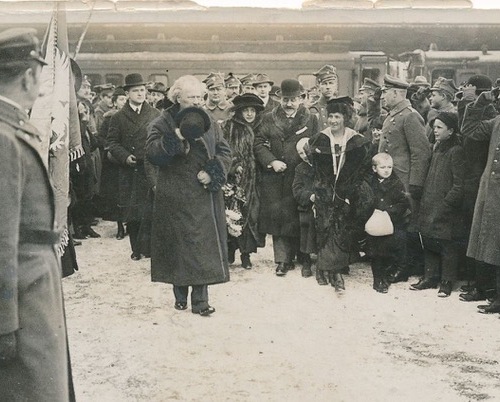
On December 25, 1918, the cruiser "Concorde" docked in the port of Gdańsk with passenger Ignacy Jan Paderewski, his wife, and accompanying English mission officers on board. From the moment the composer arrived in Poland and the decision about his visit to Poznań was announced, the German authorities launched an operation aimed at counteracting those plans. On December 26, 1918, Ignacy Jan Paderewski set off by train on the route Piła – Rogoźno – Oborniki – Poznań. (To this day, plaques commemorating his short stay at the stations can be found in Piła and Oborniki.)
At the subsequent stations, incidents provoked by the German side occurred. In Rogoźno, German officers tried to persuade the pianist to change his route and go directly to Warsaw. They failed… Different moods were shown by the Polish population, who enthusiastically welcomed the distinguished guest.
On December 26, 1918, at 9:10 p.m., the train with Master Paderewski arrived at the Poznań side (imperial) station. The Germans made a last attempt to stop the uninvited guest. However, it was already too late. German officers were detained, and turning off the lights throughout Poznań was also ineffective. Prepared Poles welcomed the dignitary by the light of several hundred torches. In this way, the Germans unwittingly created a unique atmosphere for this event. After the welcoming speeches and singing patriotic songs, the guests were taken to the Bazar hotel. In front of the hotel, the Paderewski couple and other delegates were greeted by the welcoming committee led by the mayor of Poznań, Jarogniew Drwęski, and members of the Commissariat of the Supreme People’s Council. From the window above the entrance to the Bazar hotel, the world-famous pianist spoke to the crowd gathered at Wilhelmplatz (today’s Freedom Square).
The next day, December 27, 1918, children’s demonstration parades were organized, marching to the Bazar, cheerfully waving flags. Seeing the euphoria of the Poles, the Germans undertook a final attempt to maintain the pre-arrival status quo of the pianist. Active local Germans and groups of soldiers from the 6th Grenadier Regiment organized a counter-parade, moving from the barracks at the intersection of today’s Szylinga and Bukowska streets, through Zwierzyniecka street (gathering in the zoo area), further through St. Martin street, destroying on the way the seat of the Commissariat of the Supreme People’s Council, heading towards Freedom Square. During the march, flags of the Entente states hanging on private apartment balconies were torn down.
Polish units of the Guard and Security Service and the People’s Guard were on combat readiness. Before 5 p.m., the situation got out of control. Shots were fired. The first victim was Franciszek Ratajczak1 – a soldier of the 2nd company of the Guard and Security Service (a unit established by the Germans to prevent the spread of revolutionary ideas, where a large part consisted of Poles). Franciszek Ratajczak’s company was marching towards the Bazar, where Ignacy Jan Paderewski had stopped, and when the company was at the intersection of today’s Ratajczaka and 27 Grudnia streets, machine gun shots were fired. The shooting came from the Police Headquarters located at today’s 3 Maja street. Severely wounded, Franciszek Ratajczak died a few hours later in a nearby hospital.
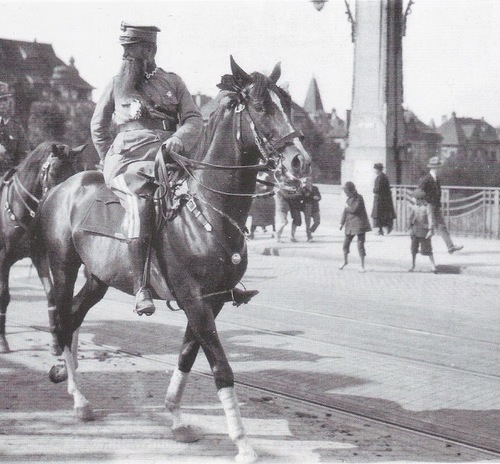
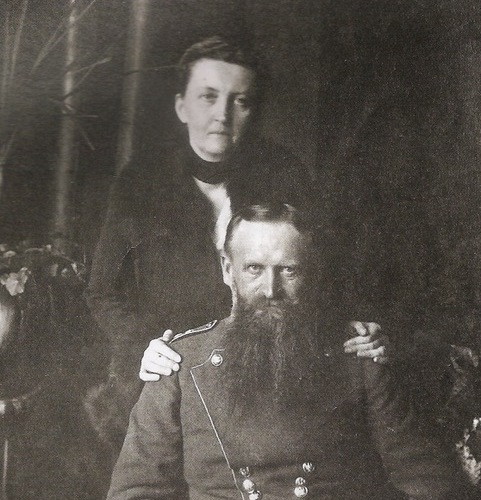
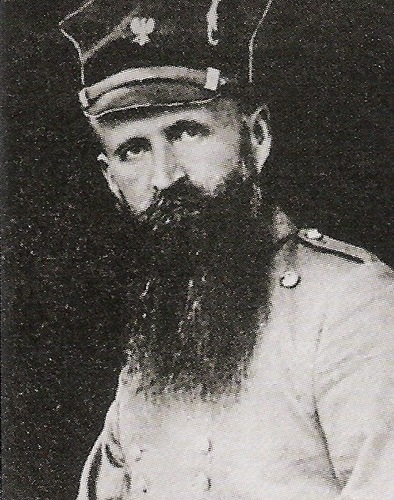
At this moment, the uprising breaks out... Two days later, almost the entire Poznań was in Polish hands. Within a few days, the insurgents controlled an area of about 25,000 km². Initially, the insurgent troops were commanded by Major Stanisław Taczak, and from mid-January 1919 by General Józef Dowbor-Muśnicki. News of the events in Poznań quickly reached the entire province. At the same time, on December 27, a secret meeting was convened in Zbąszyń in Mr. Felner’s hall (today’s "Senator") of all young people – Polish patriots who were ready to fight for the independence of their Homeland. Now, waiting for the signal, volunteers from across the region were reporting. In individual villages, teams were formed that later merged into platoons and companies. Their leaders were usually soldiers who had previously fought in the ranks of the German army.
Zbąszyń, as an important transport hub, became the first target of insurgent actions. The first attempt to seize the station was on January 6, 1919, and the second attack took place from January 10 to 11. Although both operations ended in failure, this did not discourage the insurgents – they kept fighting… until victory.
to be continued.
1 Today, one of the main streets of Poznań bears the name of Franciszek Ratajczak.
Pakiety pobytowe w Ostoi Chobienice

- Non-standard cancellation conditions
- Breakfast and Dinner

- Flexible Reservation – Online Payment
- Breakfast

- Flexible Reservation – Online Payment
- Breakfast and Dinner

- Flexible Reservation – Online Payment
- Breakfast and Dinner

- Flexible Reservation – Online Payment
- Half Board

- Flexible Reservation – Online Payment
- Breakfast and Dinner

- Flexible Reservation – Online Payment
- Breakfast and Dinner
